Horse Fly Mask Buying Guide: Choosing the Right Protection for Your Horse
Horse Fly Mask Buying Guide: Choosing the Right Protection for Your Horse
Why Every Horse Needs a Fly Mask
A horse fly mask is one of the simplest and most effective pieces of equipment you can buy for your horse’s comfort. Flies are not just an annoyance. They cause eye infections, spread disease, trigger allergic reactions in sensitive horses, and create enough stress that some horses lose condition simply from constant harassment through summer months.
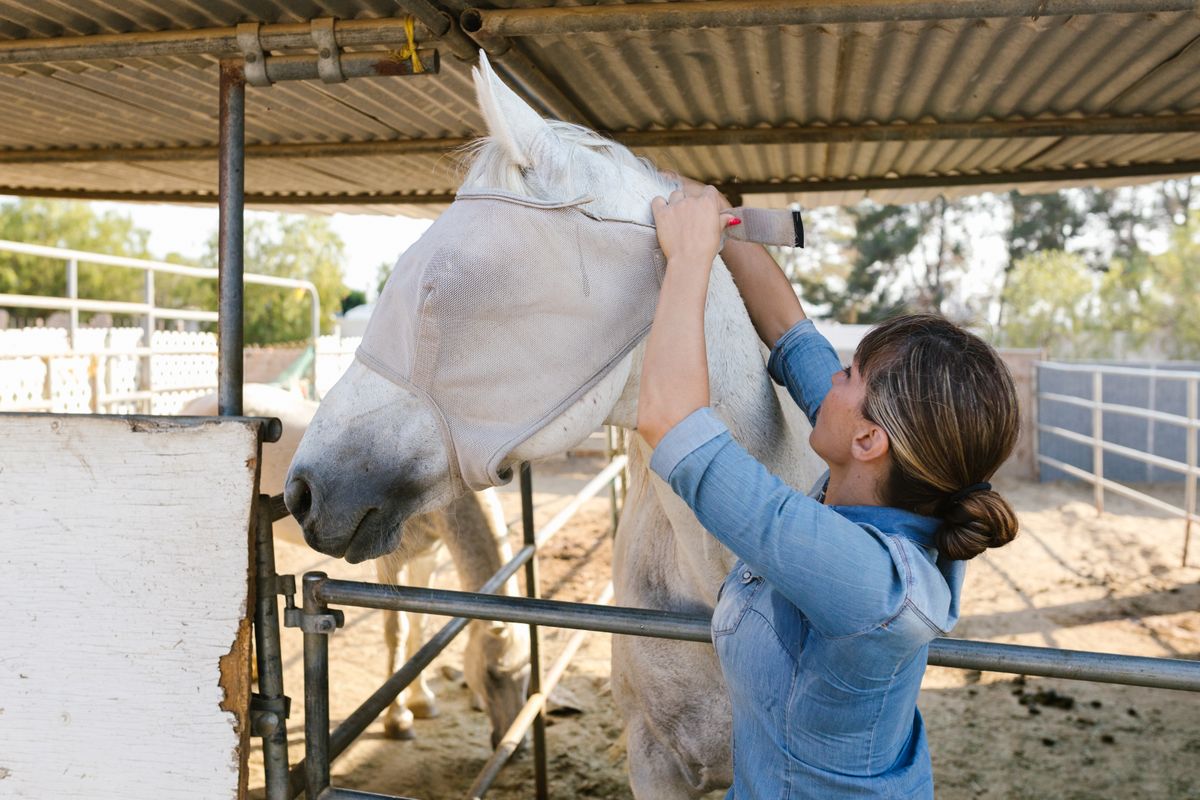
A good horse fly mask blocks insects from reaching the face, eyes, and ears without restricting vision or airflow. The horse can see clearly through the mesh, stay cool, and go about its day without the constant head-shaking, eye-rubbing, and agitation that fly season brings. It pairs well with other summer essentials like a lightweight horse blanket or fly sheet, and fits naturally into a complete horse care routine that includes a properly fitted horse saddle for riding season.
Types of Horse Fly Masks
Not all fly masks cover the same areas. Knowing what your horse needs determines which type to buy.
| Mask Type | Coverage | Best For |
|---|---|---|
| Basic face and eye | Eyes, face | Horses with minimal ear sensitivity |
| Full face with ears | Eyes, face, ears | Horses plagued by gnats in ears |
| Extended nose | Eyes, face, ears, muzzle | Horses with sweet itch or nose sensitivity |
| UV-blocking | Eyes, face, some with ears | Horses with pink skin, light eyes, or sun sensitivity |
| Fly bonnet | Ears only | Ridden use, competition |
With Ears vs Without Ears
Whether to choose a mask with ear covers depends entirely on your horse. Some horses have no interest in their ears and do not need the extra coverage. Others, particularly those in areas with high gnat pressure, will rub their ears raw on fence posts if not protected. If your horse shakes its head frequently in summer, pins its ears, or you notice gnats clustering around the base of the ears, an ear-covering mask is worth the slightly higher cost.
Materials and Mesh: What to Look For
The mesh on a horse fly mask needs to balance two things: keeping insects out and maintaining clear vision. Very fine mesh blocks more insects but can reduce airflow and make it harder for the horse to see in low light. Standard mesh, around 1mm openings, keeps most flies out while allowing good visibility.
Some masks use a darker mesh which reduces glare and works well for horses with light-sensitive eyes. UV-blocking masks use a specialized mesh that filters ultraviolet light, important for horses with pink skin around the eyes or those prone to eye conditions triggered by sun exposure.
How to Size a Horse Fly Mask
Sizing varies between brands, but most use descriptions like pony, cob, full, and oversize, or sometimes small, medium, large, and extra-large. Measure from the center of the browband position across the forehead, and from just below the eye to the cheekbone. These measurements, combined with the manufacturer’s size chart, give you the best starting point.
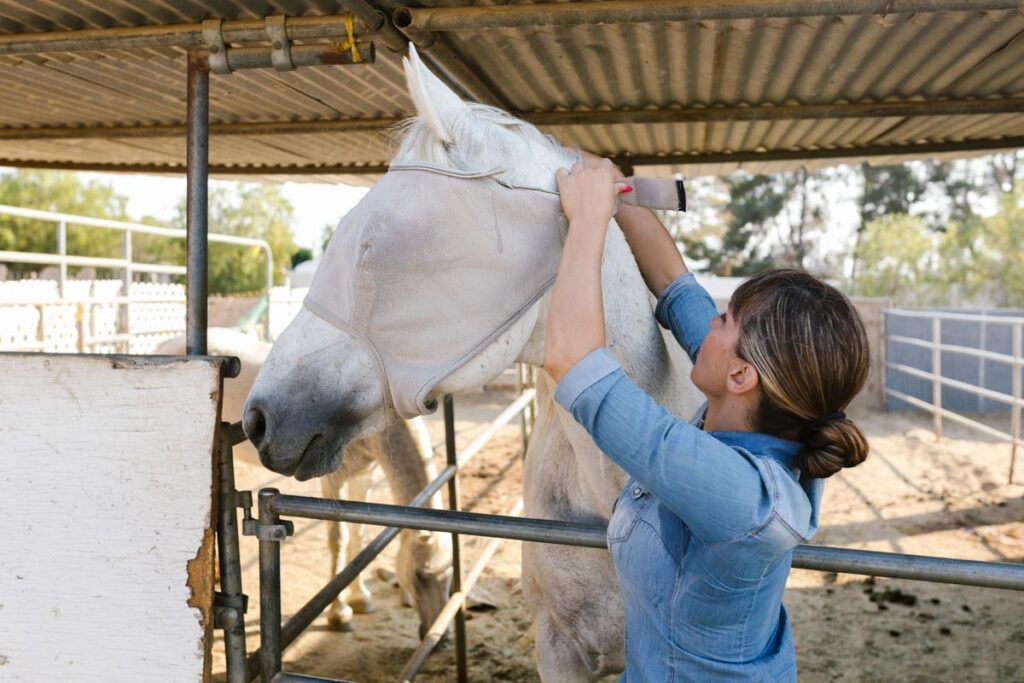
A mask that fits well sits snugly without pulling tight. You should be able to slip a finger under the fastenings with slight resistance. The eye area should have a clear gap between the mesh and the horse’s actual eye, meaning the mask is not resting directly on the face. The bottom edge should sit below the cheekbone without dangling loose enough to catch on something.
Common Fit Problems
A mask that is too small puts pressure on the eyes and can cause the horse to try to rub it off, creating the opposite of the calm you want. A mask that is too large shifts around with head movement, obscures vision when it slides, and is more likely to catch on fencing. If a mask regularly ends up in a corner of the field each morning, the fit needs adjusting before blaming the horse for removing it.
Fly Mask Safety: What to Check Regularly
Fly masks are generally safe for turnout, but they need regular inspection. Check twice per week during the fly season: look for tears in the mesh that could let insects in or trap a hoof if the horse paws at its face. Inspect the fastenings for wear or fraying. Make sure the mask is not rubbing raw patches into the facial bones or around the ears.
Remove the mask at least every two to three days to check the skin underneath and clean off any sweat or debris. Some owners prefer to remove masks at night and replace them in the morning, which also gives the skin a chance to breathe and makes it easier to catch early signs of irritation.
Cleaning and Maintaining Your Horse Fly Mask
Clean your horse fly mask weekly during heavy use. Most masks tolerate hand washing or a gentle machine wash in a mesh laundry bag. Rinse thoroughly, since detergent residue against the face can cause skin irritation. Hang to dry rather than using a dryer, which can damage mesh and elastic components.

How Many Fly Masks Do You Need?
For horses in active fly seasons, two masks is the practical minimum: one in use and one washing or drying. A mask used every day and washed weekly will last one to two seasons before the mesh stretches, fastenings wear out, or the UV protection degrades. Budget masks often need replacing every season. Higher-quality masks from established equestrian brands last longer and fit more consistently.
Fly Masks for Horses with Special Needs
Horses with eye conditions such as equine recurrent uveitis, corneal ulcers, or photosensitivity need UV-blocking fly masks with as much coverage as possible. Some horses with these conditions wear fly masks in the stable during daylight hours as part of their management plan. Discuss this with your veterinarian if your horse has a known eye condition.
Horses with sweet itch, a hypersensitive allergic reaction to midge bites, benefit from extended-nose masks combined with a full fly sheet covering the body. The combination blocks access to the sensitive areas along the mane and face where midges prefer to feed. According to Wikipedia’s entry on fly masks, the use of protective face coverings on horses dates back centuries, with modern designs offering far more comfort and visibility than early versions allowed.
Top Features Worth Paying For
A protruding eye guard that keeps mesh away from the eye is the single most important feature in any fly mask. Soft binding around all edges reduces rub risk. Adjustable fastenings accommodate the variation in head shape between horses. Double stitching at stress points means the mask survives an active horse in the field. These features separate a mask that lasts two seasons from one that falls apart in six weeks.
Frequently Asked Questions
Can I leave a fly mask on my horse overnight?
Many owners remove fly masks at night and replace them in the morning, which allows the skin to breathe and makes it easier to spot early signs of rubbing or irritation. If flies are active at night in your area, a lightweight mask can be left on, but inspect the fit carefully and check the skin underneath every two to three days at minimum to catch any pressure sores before they become a problem.
How do I know if my horse's fly mask fits correctly?
A correctly fitting fly mask allows you to slip a finger under the fastenings with gentle resistance. The mesh should have a clear gap between it and the horse’s eye, meaning it is not resting directly on the face. The mask should not shift when the horse moves its head. Rub marks on the facial bones, around the ears, or at the cheekbones are signs the fit needs attention.
What is the difference between a fly mask and a fly bonnet?
A fly mask is a full face covering worn during turnout that protects the eyes, face, and often the ears from insects. A fly bonnet is a smaller, lighter cover worn over the ears only, typically used during ridden work and competition to block insects from the ears without obscuring the horse’s vision. Some riders use a fly bonnet during schooling sessions in summer to keep their horse focused and comfortable.