How to Bottle Feed a Kitten Without a Mother
How to Bottle Feed a Kitten Without a Mother
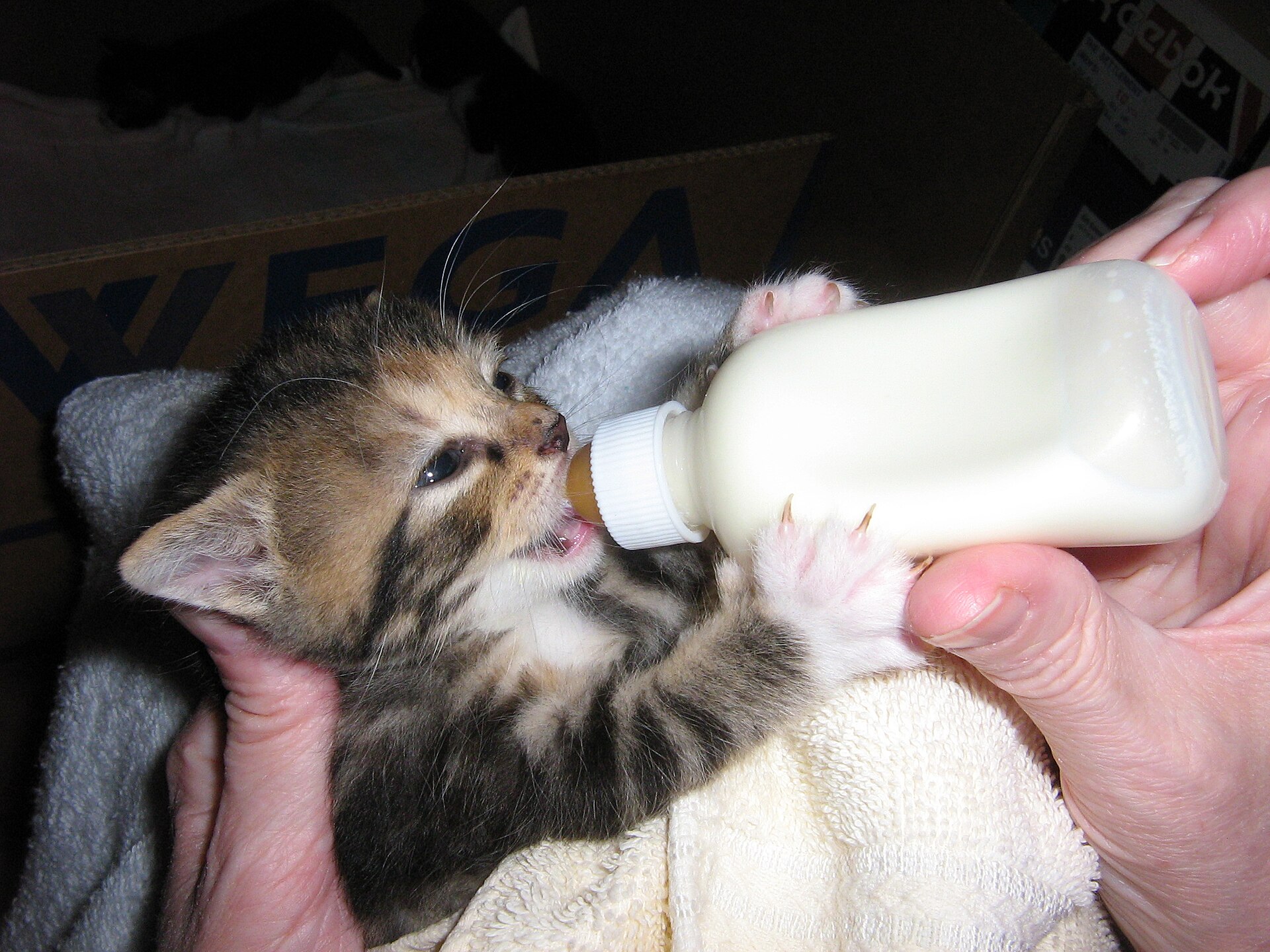
Finding a kitten with no mother is frightening, and most people feel they are already doing it wrong. You are not. Knowing how to bottle feed a kitten comes down to a few things done gently and on time, and all of them can be learned in an afternoon. This is the whole routine, in the order you will need it.
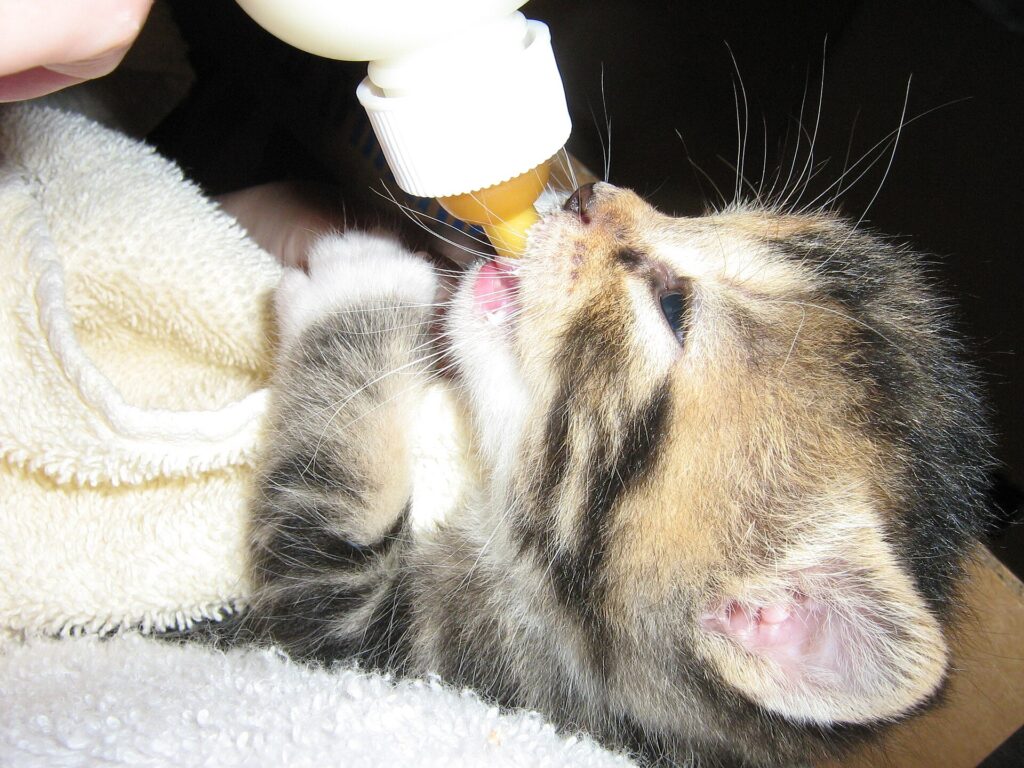
Warm the Kitten Before You Feed
This step comes first and it matters more than the feeding itself.
A kitten under three weeks old cannot regulate its own body temperature. If it feels cool to the touch, its digestion has effectively shut down, and milk given now will sit in the stomach undigested and make it seriously unwell. Feeding a cold kitten does harm, not good.
Wrap the kitten in a soft towel and hold it against your body, or lay it beside a covered heat pad on low with room to crawl away. Wait until the belly and ears feel warm, usually twenty to thirty minutes. Only then reach for the bottle.
Check this before every feed, not just the first. Persistent chill needs a vet, since hypothermia in a newborn is genuinely dangerous.
Use Kitten Formula, Never Cow's Milk
Cow’s milk is the mistake almost everyone makes. It causes diarrhoea, and in an animal this small that becomes dehydration within hours.
What you need is kitten milk replacer, sold as powder or ready mixed. Pet shops and most vet practices stock it. Mix it exactly as the tin says, since a strong mix upsets the stomach as readily as a weak one starves.
| Option | Verdict |
|---|---|
| Kitten milk replacer | What you want. Formulated for feline digestion |
| Cow’s milk | No. Causes diarrhoea and dehydration |
| Goat’s milk | Emergency only, for a few hours at most |
| Puppy formula | Not ideal. The protein and fat balance is wrong |
| Water with sugar | Emergency stopgap while you get to a shop |
Serve it at body temperature, around 38 degrees Celsius. Test a drop on your wrist. If you cannot feel it, it is right. Never microwave, because the hot pockets that creates will scald a mouth this small.
Hold the Kitten the Right Way Up
This is the part people get wrong most often, and the part with the highest stakes.
Never feed a kitten on its back the way you would a human baby. Milk enters the lungs from that position, causing aspiration pneumonia, which is frequently fatal.
Lay it on its stomach instead, on your lap or a folded towel, all four feet underneath, exactly as it would nurse from its mother. Keep the head level and let the kitten pull the milk rather than squeezing it in.
Getting the Latch Started
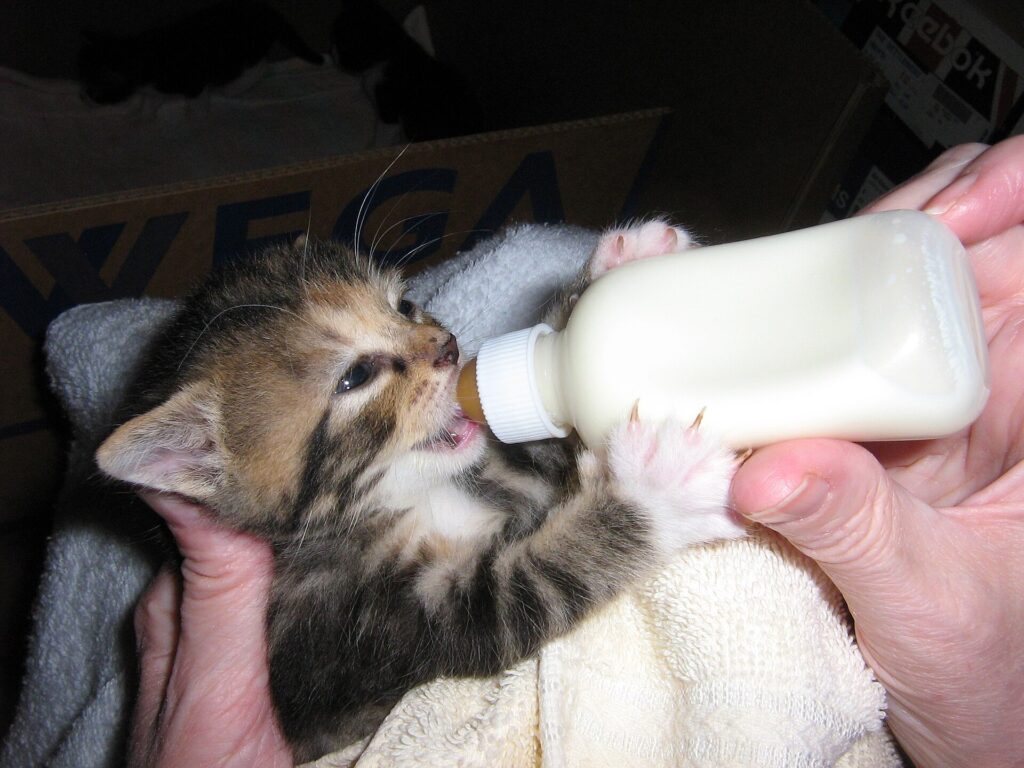
Touch the teat to the lips and wait. Most kittens open up within seconds. If one refuses, put a single drop of milk on the lips so it tastes what is on offer.
Hold the bottle at a shallow angle, not straight down. The teat should stay full so no air is swallowed, but gravity should not do the work.
If milk bubbles from the nose, stop. Sit the kitten upright, let it clear itself, then start again slowly with a smaller hole in the teat.
How Much and How Often
The guide below covers most healthy kittens. Weigh yours on a kitchen scale daily, because steady gain is the one measurement that proves the feeding is working.
| Age | Feeds per day | Roughly per feed | Through the night? |
|---|---|---|---|
| Under 1 week | Every 2 to 3 hours | 2 to 6 ml | Yes |
| 1 to 2 weeks | Every 3 to 4 hours | 6 to 10 ml | Yes |
| 2 to 3 weeks | Every 4 to 5 hours | 10 to 14 ml | One feed |
| 3 to 4 weeks | Every 5 to 6 hours | 14 to 18 ml | Usually not |
A kitten feeding well gains roughly 10 to 15 grams a day. Two days without gain, or any loss, means a call to the vet rather than a tweak to the routine.
Let the kitten stop when it wants. A full one turns its head away, and a slightly rounded belly is what you want. Tight and hard means too much.
Burping and Toileting Afterwards
Two small jobs follow every feed, and skipping either causes problems within a day.
Burp first. Hold the kitten upright against your shoulder and pat the back gently until you feel a small release of air.
Then stimulate it to toilet. Kittens under about four weeks cannot go on their own, which is why their mother licks them. Wipe under the tail with a cotton pad dampened with warm water, using short soft strokes, until it passes urine and usually a stool. It takes under a minute and it is not optional.
Keeping Everything Clean
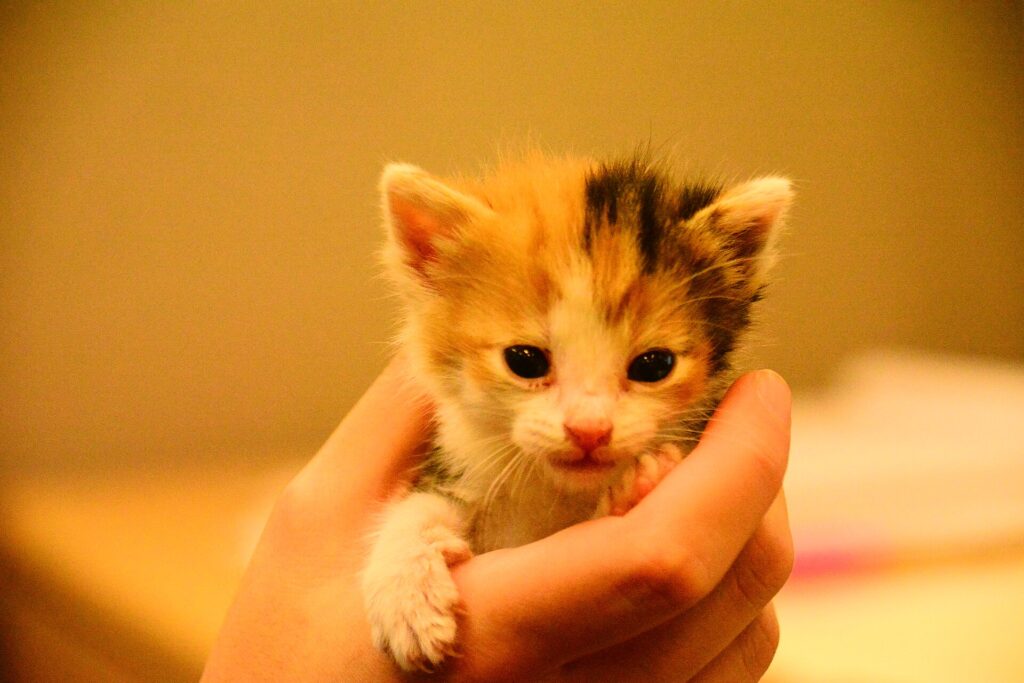
A kitten this young has almost no immune defence, because it never received colostrum from its mother in the first hours of life.
- Wash bottles and teats in hot soapy water after every feed, then rinse well
- Sterilise once a day, the same way you would baby bottles
- Mix only what you will use in twenty four hours and keep it refrigerated
- Throw away anything left in the bottle rather than reheating it
- Wash your hands before and after handling
Keep bedding dry and change it whenever soiled. Warm and damp grows exactly what you do not want near a newborn.
When to Start Weaning
Around four weeks the teeth arrive and the kitten begins to bite the teat rather than suck it. That is your signal to begin weaning.
Mix formula with a little wet kitten food into a thin gruel on a shallow saucer. Most kittens walk through it before eating it, which is normal. Keep bottle feeding alongside and reduce the bottles as more of the meal gets eaten. By seven or eight weeks most are fully on solids.
Portions from that point are their own subject, and the principle holds whichever animal you raise. Our guide to feeding a puppy properly covers how growth stage changes what a young animal needs.
When to Call a Vet Straight Away
Most bottle fed kittens do well. These signs are the ones that need help the same day rather than watching and waiting.
- Cold to the touch and not warming up after thirty minutes
- Refusing to feed across two or more feeds
- Losing weight, or no gain for two days
- Diarrhoea, particularly if watery or repeated
- Milk coming from the nose during feeds
- Limp, floppy, or not responding to handling
- Straining without passing anything after stimulation
A newborn declines faster than an adult cat, so the usual advice to wait a day does not apply. If something feels wrong, phone.
Otherwise keep it simple. Warm, fed on time, burped, stimulated, clean, and left to sleep. Do those six things and a hand reared kitten grows into a cat as healthy as any other. Once solids begin, our guide to pet wellness supplements covers what supports growth through the first year.
Frequently Asked Questions
How often should I bottle feed a newborn kitten?
A kitten under one week old needs feeding every two to three hours, including overnight. That stretches to every three or four hours in the second week, and every five or six hours by four weeks. Steady daily weight gain is the sign the schedule is working.
Can I give a kitten cow's milk if I have no formula?
No. Cow’s milk causes diarrhoea in kittens, which leads to dehydration very quickly at this size. If you cannot reach a shop immediately, warm water with a little sugar will hold a kitten for a few hours, but get proper kitten milk replacer as soon as you can.
Why must a kitten never be fed on its back?
Feeding on the back lets milk enter the lungs, which causes aspiration pneumonia and is often fatal in newborns. Always lay the kitten on its stomach with all four feet underneath and the head level, which is exactly the position it would nurse in naturally.